

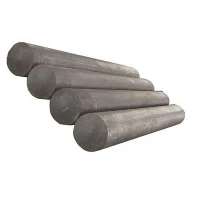
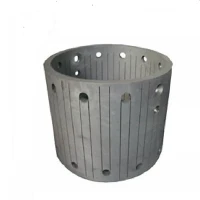
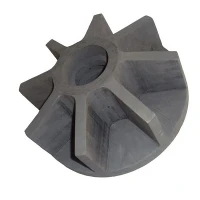
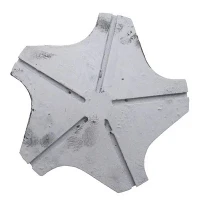
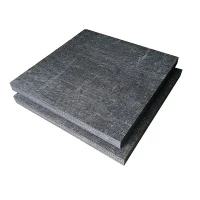
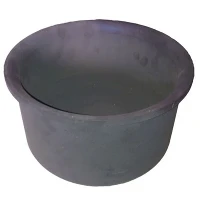
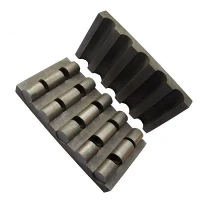
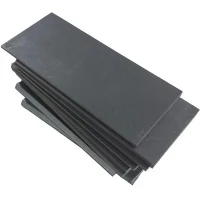
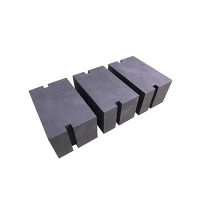
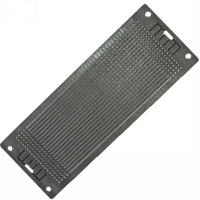
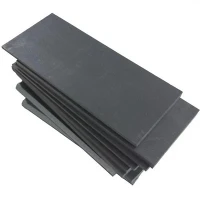
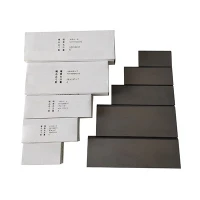
Graphite Mould
Why Choose Zibo Jinpeng Composite Materials Technology Co., Ltd.?

Zibo Jinpeng Composite Materials Technology Co., Ltd. is located in Wangcun Town, Zibo City, Shandong Province, which is a famous graphite carbon industry base in China. Our company mainly produces and processes graphite carbon materials. It has a complete production process and marketing system. It has been engaged in the production and processing of graphite products for more than 20 years. It has built its own production and processing process system and has three national invention patents. It has established extensive technical cooperation relationships with well-known domestic university laboratories such as Shandong University of Technology and Northwestern Polytechnical University and has produced graphite parts for many well-known companies. It has its own related industrial R&D system and testing and testing equipment.
Professional Technical Team
We have more than 20 years of experience and dozens of senior engineers in the graphite R&D, production and manufacturing industry. Whether it is the research and development of graphite raw materials, the precise processing of graphite parts, and the graphitization and purification of related products, our high-level technical team can customize professional solutions for you.
Wide Range of Applications
Our product application range includes the glass industry, high temperature furnace industry, refractory industry, plastics industry, semiconductor electronics industry, photovoltaic industry, pharmaceutical and chemical industry, aerospace industry, metallurgical industry, automotive industry, renewable energy industry, textile machinery manufacturing, glass machinery manufacturing.
Professional Service
Fully communicate with customers before sales, provide professional product suggestions and technical support according to customer needs, and ensure the high quality of products in manufacturing, packaging, logistics and other aspects. During the sale period, Zibo Jinpeng Graphite Factory not only provides on-time delivery services but also provides comprehensive after-sales technical support such as lifetime warranty, technical consultation and problem diagnosis to ensure customer satisfaction and trust. In terms of after-sales service, we attach great importance to customer feedback, promptly solve problems and concerns raised by customers, and continuously improve service quality and efficiency based on customer experience and suggestions.
Wide Product Range
Our main products are Graphite heating elements, Graphite felt & carbon felt & rigid felt, Graphite crucible, etc. At present, North America, Eastern Europe and Southeast Asia are Zibo Jinpeng's main international cooperation destination markets. Thanks to stable product quality and excellent material properties, the graphite products produced by Zibo Jinpeng have a high market share in the fields of smelting, chemical industry, and high-temperature industrial furnace accessories.

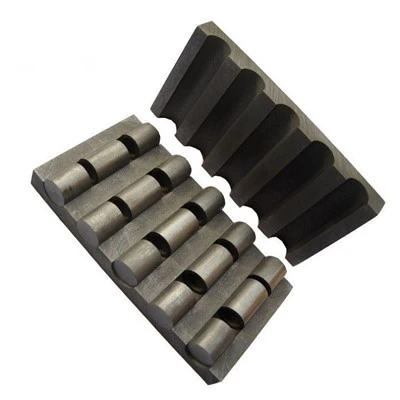
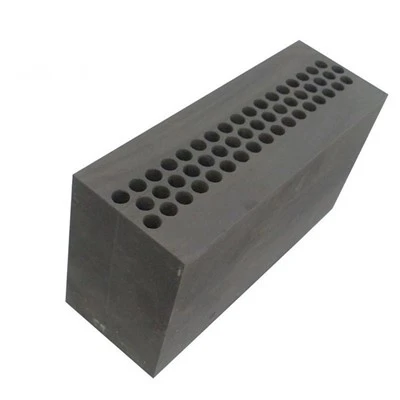


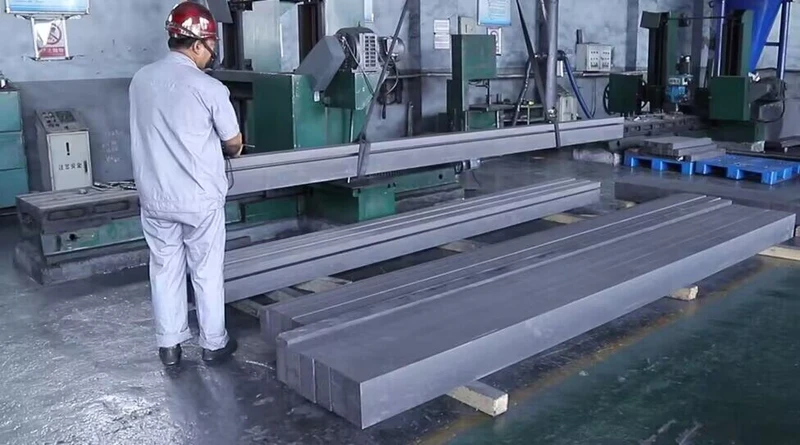
What is Graphite Mould?
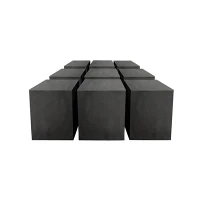
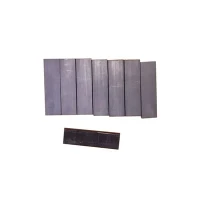
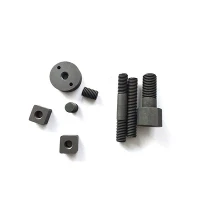
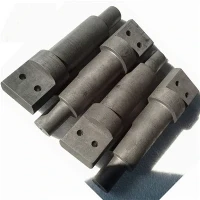
Graphite mould is a type of mould made from graphite material that is used for casting metallic products such as jewelry, coins, and industrial components. It is widely employed in the manufacturing industry because of its high melting point, excellent thermal conductivity, and chemical stability. Graphite moulds are also known for their durability, low shrinkage, and ability to produce precise and intricate designs. They can be custom-made to suit specific casting requirements, and are being increasingly used in 3D printing and additive manufacturing processes.
Graphite mold casting process is a simple process where a plastic aggregate consisting of graphite grains, pitch, carbonaceous cement, starch and water are use for making the mold. The mixture is squeezed around pattern and allowed to set. When the mold dried, it is fired to dry to form a strong mold. The mold is then assembled by fixing the sprue, cores and gates in its.
The two halves of the mold are locked together and molten metal injected into it under low pressure. Some foundries feed the molten metal into the mold from the bottom, using semi-automated machines. The mold is held together throughout the solidification stage of the casting. The mold halves are separated to remove the cast and the process is repeated again. When pouring care must be taken to to keep a control on the fill rate, cycle time, and temperature.
Features of Graphite Mould
1. High Temperature Resistance: The melting point of graphite mould is 3850±50℃, and the boiling point is 4250℃. Even if burned by ultra-high temperature arc, the weight loss is very small.
2. It Has High Mechanical Strength: The strength of graphite mould increases with temperature below 2500°C. At 2000°C, the strength of graphite mould doubles and can withstand greater working pressure.
3. It Has Excellent Electrical and Thermal Conductivity: the electrical conductivity of graphite mould is one hundred times higher than that of general non-metallic minerals, and its thermal conductivity is higher than that of metal materials such as steel, iron, and lead. Its thermal conductivity is hundreds of times larger than that of general non-metallic materials. The steel is twice as big, and the good thermal conductivity makes the heat transfer even when the whole mold is working.
4. Thermal Shock Resistance And Thermal Expansion Coefficient: graphite mould can withstand drastic changes in temperature without being damaged when used at room temperature. When the temperature changes suddenly, the volume of graphite mould will not change much and cracks will not occur.
The small thermal expansion coefficient of graphite mould is the advantage of hot pressing molds: one is that the mold can withstand sharp changes in temperature without cracking; the other is that the expansion coefficient of the drill bit matrix is greater than that of the graphite mold after hot pressing, so the A gap will be formed between the molds, so that it is easy to demold without damaging the graphite mold.
5. Chemical Stability: graphite mould has good chemical stability at room temperature, and is resistant to acid, alkali and organic solution corrosion. In the process of hot pressing, a protective gas layer of C0 and C02 is generated, which protects the drill body.
6. Chemical Corrosion Resistance: graphite mould has the characteristics of chemical corrosion resistance, not being infiltrated by most metal solutions, and not reacting with most metals at low temperature. It can not stick to the mold during hot pressing, easy to demold, and the mold can be reused.
Types of Graphite Mould
The use of artificial graphite materials with minimal thermal deformation can be used to manufacture sintered molds and brackets for transistors, which are now widely used. It has become an indispensable material for the development of the semiconductor industry. In addition, graphite molds are also used in molds for cast iron, durable molds for various non-ferrous metals, molds for cast steel, molds for heat-resistant metals (titanium, zirconium, molybdenum, etc.) and aluminum for welding rails. Heat-welded molds, etc. Graphite molds for hot-pressed sintered diamond tools bear the dual role of heating elements and mold support during the manufacturing process of diamond tools. The quality of graphite molds directly affects the dimensional accuracy and appearance of diamond tools. Hot pressing sintering process requirements: The temperature reaches (1 000 ± 2) ° C, the forming pressure is 16 to 50 MPa, the heat preservation and holding time is 15 to 30 minutes, and the environment is non-vacuum. Under this working condition, graphite molds for forming and heating elements are required to have conductivity, high resistivity, and sufficient mechanical strength, as well as good oxidation resistance and long service life to ensure diamond Tool dimensional accuracy and excellent performance. At present, graphite mold materials used for diamond tool manufacturing in developed countries in the West are mainly ultrafine particle structure, high purity and high graphitization degree graphite materials. The average particle size is required to be less than 15 μm, even less than 10 μm, and the medium pore size is less than 2 μm. A graphite mold made of this carbon raw material has a small porosity, a dense structure, a high surface finish, and strong oxidation resistance. The average service life is 30 to 40 times. Diamond molds require high material hardness, good oxidation resistance, and high processing accuracy. The use of high-quality graphite raw materials greatly extends the life of the mold and improves the oxidation resistance.
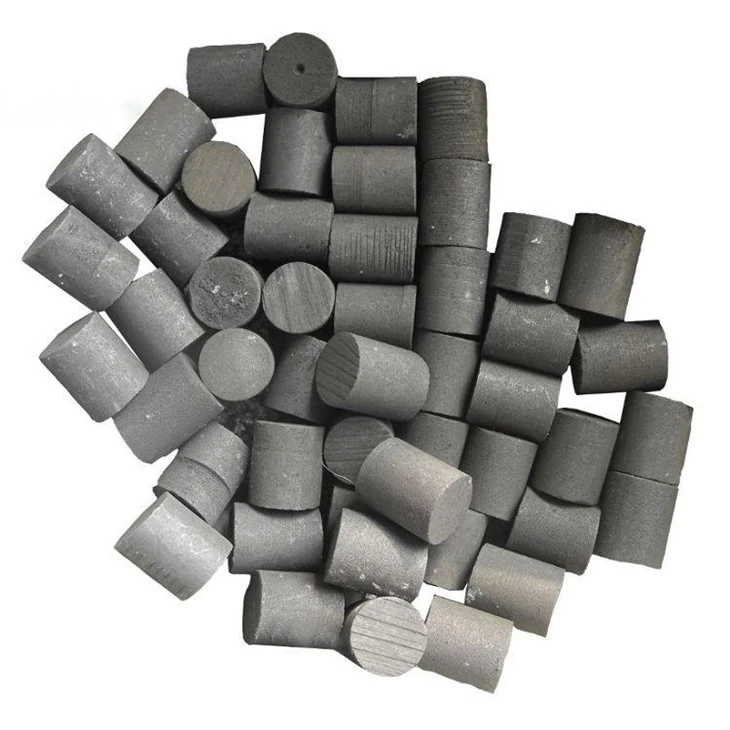
Graphite Mold for Pressure Casting
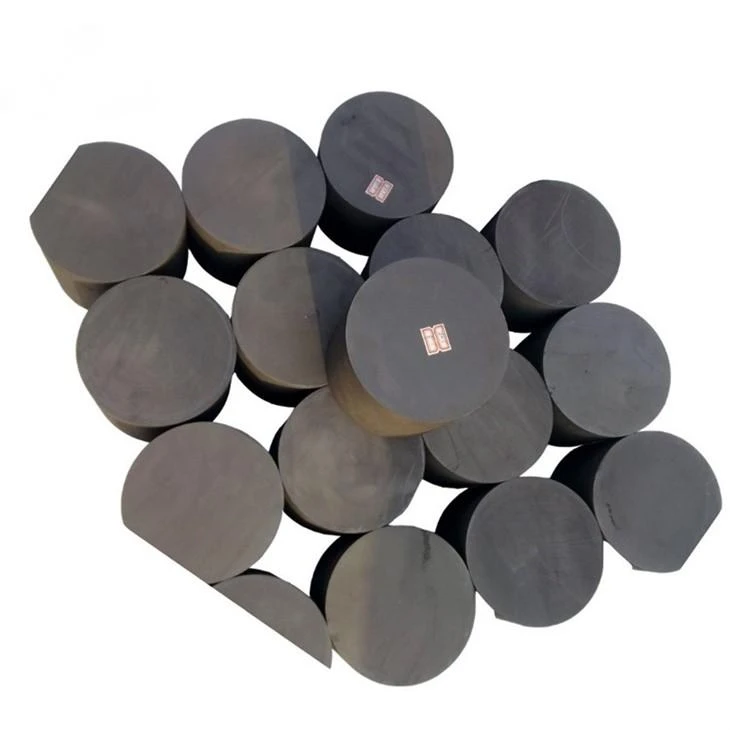
Artificial graphite materials have been successfully used in the pressure casting of non-ferrous metals. For example, zinc alloy and copper alloy castings produced by pressure casting molds made of artificial graphite materials have been used in automotive parts and the like.
Graphite molds have been successfully applied to centrifugal casting. The United States has used artificial graphite molds with a wall thickness of 25 mm or more to centrifugally cast bronze sleeves. In order to prevent burning of the artificial graphite mold, certain anti-oxidation measures can be taken. After casting a certain number of castings, if the inner surface of the mold is found to be damaged, the size of the inner hole of the mold can be enlarged to be used for casting large-size casing.
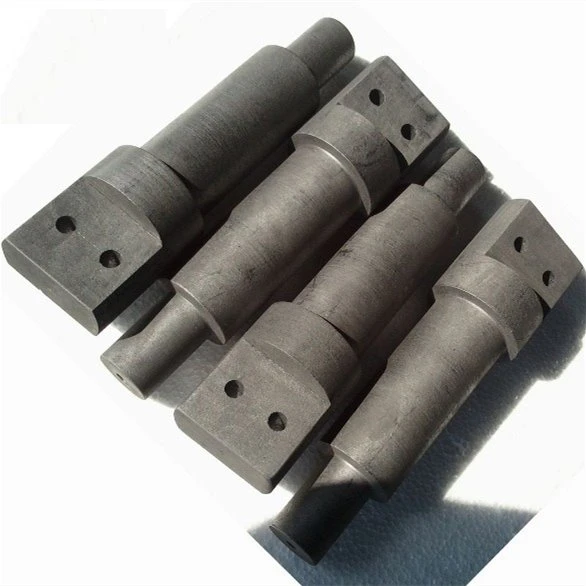
Hot Pressing Mould
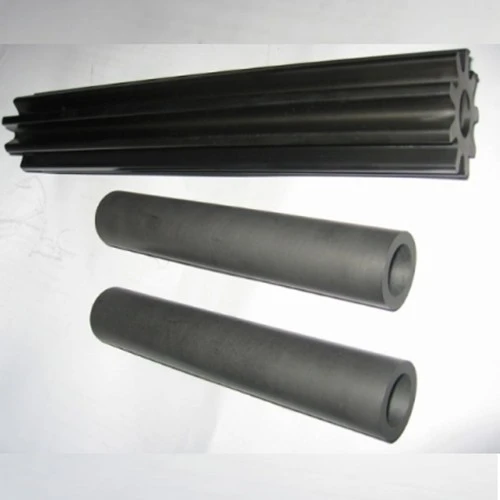
The artificial graphite hot-pressing mold has the following characteristics for the pressure sintering of hard alloys: First, if the pressing temperature is increased to 1350-1450 degrees, the required unit pressure can be reduced to 67-100 kgf / cm (That is, 1/10 of the cold pressing pressure). Second, pressurization and heating are performed in the same process, and a dense sintered body can be obtained after a short time sintering.
Because graphite materials have chemical stability, they are not easy to be infiltrated by molten glass, do not change the composition of glass, graphite materials have good thermal shock resistance, and their size changes with temperature. They have become indispensable molds in glass manufacturing in recent years. Materials, it can be used to make glass tubes, elbows, funnels and other various shaped glass bottles.
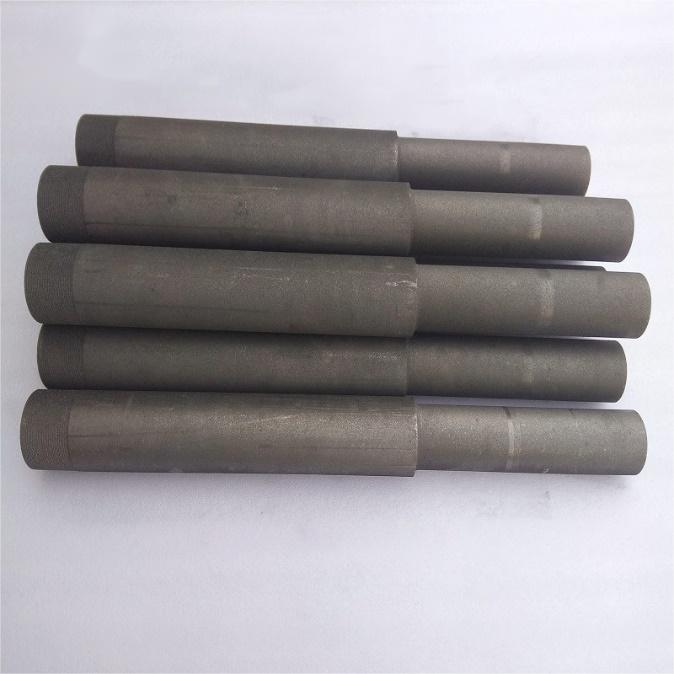
Advantages of Graphite Mould
1
Excellent thermal conductivity and conductivity
2
A low linear expansion coefficient, excellent thermal stability, and heat shock resistance are all characteristics of this material.
3
It is resistant to chemical corrosion and does not react readily with the majority of metals, which is a plus.
4
The strength of the material increases with the increase in temperature at high temperatures (above 800 degrees Celsius in most copper matrix sintering temperatures).
5
It possesses excellent lubrication and wear resistance.
6
It is simple to work with and has good machining performance characteristics. Molds with complex shapes and high precision can be created using this material.
Application of Graphite Mould
Continuous Casting and Semi-Continuous Casting
The promotion of advanced manufacturing methods such as direct continuous (or semi-continuous) manufacturing of bars or pipes from molten metal has increased in recent years, both domestically and internationally. This method has been adopted in China for the production of copper, copper alloys, aluminum, and aluminum alloys. Continuous casting or semi-continuous casting molds for non-ferrous metals are made of artificial graphite, which is considered to be the most suitable material. As evidenced by production practice, the graphite mold not only improves the casting speed due to its high thermal conductivity (thermal conductivity is a property that determines the solidification speed of a metal or alloy) and good self-lubricating performance, but also allows for direct processing in the following process due to the ingot's accurate size, smooth surface, and uniform crystal structure. As a result, not only does the yield increase significantly, but the loss of waste products is reduced, and the product quality is significantly improved.
Pressure Casting
It has been proven that artificial graphite can be used successfully in the pressure die casting of non-ferrous metals. Among other things, zinc alloy and copper alloy castings made with pressure casting molds made of artificial graphite materials have been used in automobile parts and other applications.
Centrifugal Casting
Centrifugal casting has been successfully accomplished with the use of graphite molds. It has been decided in the United States to use an artificial graphite mold with a wall thickness greater than 25mm for centrifugal casting of the bronze casing. Certain anti-oxidation measures can be implemented in order to reduce the risk of artificial graphite mold catching on fire. In the event that it is discovered that the inner surface of the mold has been burned after casting a certain number of castings, the inner hole of the mold can be increased in size to allow for the casting of a large-size casing.
Glass Forming
Because of the chemical stability of the stone graphite material, it is difficult to be infiltrated by the molten glass and will not alter the composition of the glass once it has been molten. The heat-resistant impact performance of graphite is excellent, and the material’s size changes only slightly with temperature. In recent years, it has emerged as an essential mold material in the glass manufacturing industry, and it can be used to create molds for glass tubes, bends, funnels, and other custom-shaped glass bottles, among other applications.
Sintering
It is possible to manufacture the sintering mold and support for transistors by taking advantage of the characteristics of very small thermal deformation of artificial graphite material. It has a long history of use. It has evolved into a critical component in the advancement of the semiconductor industry. As well as molds for cast iron, graphite molds are also used in the production of wear-resistant molds for a wide range of non-ferrous metals, as well as molds for heat-resistant metals (such as titanium and zirconium). Thermit welding molds are also used in the production of rail welds.
How to Clean Graphite Mould
Graphite mold cleaning is a important process of maintenance. Generally, there will be dirt or residue on the graphite mold after using. For different dirt, it has different way to clean. Below is the cleaning way of graphite mold:
Resins such as polyvinyl chloride will produce hydrogen chloride gas which will make the graphite mold corrosion. Some residues are isolated from flame retardants and antioxidants which can corrode steel. And some coloring agent will make the steel rust. Even the water, it can also damage the graphite mold if it leave too long time. Each time when the graphite mold is removed from the press machine, please open check the dirt first and then clean all the residues to prevent it from corroding the steel surface.
Our Factory
We have a complete factory production, quality supervision and delivery.

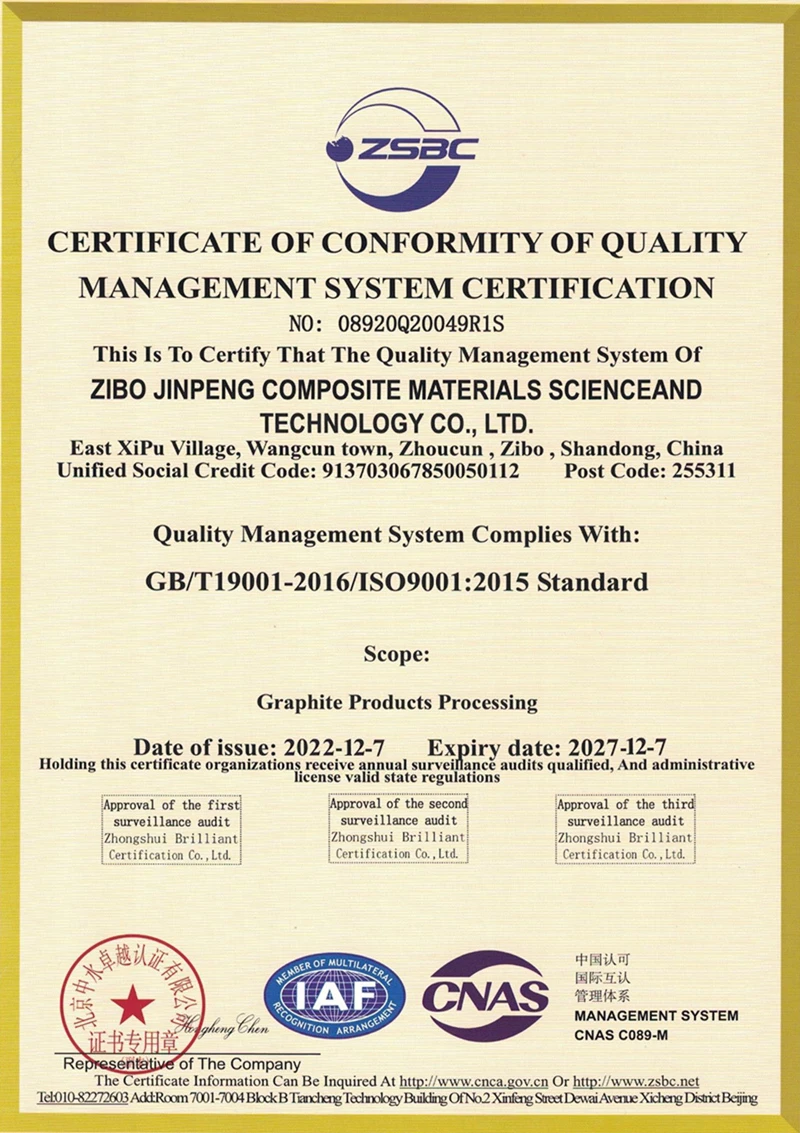
Our Certificate
At present, we have obtained the following certificates.
Ultimate FAQ Guide to Graphite Mould
Q: 1. What is a graphite mould?
Q: 2. What are the benefits of using a graphite mould?
Q: 3. What materials can be used with a graphite mould?
Q: 4. What is the process of creating a graphite mould?
Q: 5. How long does a graphite mould last?
Q: 6. What are the different types of graphite moulds?
Q: 7. Are there any disadvantages to using graphite moulds?
Q: 8. How long does it take to manufacture a graphite mould?
Q: 9.Can graphite moulds be reused for different materials?
Q: 10. Are graphite moulds expensive?
Q: 11. Can graphite moulds be repaired?
Q: 12. How should graphite moulds be stored?
Q: 13. How should graphite moulds be cleaned?
Q: 14. What is the largest size of graphite mould that can be made?
Q: 15. Can graphite moulds be used with high-temperature materials?
Q: 16. How accurate are graphite moulds?
Q: 17. Can graphite moulds be used in large-scale manufacturing?
Q: 18. How are graphite moulds used in the production of metal parts?
Q: 19. How are graphite moulds used in the production of plastic parts?
Q: 20. How are graphite moulds used in the production of ceramic parts?